


 English
 中文简体
 русский
 Español
 عربى

2 Conductor Shielded Cable: A Practical Selection and Installation Guide
Content
- 1 What Makes a Cable 2 Conductor Shielded
- 2 Where a Two-Conductor Shielded Cable Works Best
- 3 Specifying a Two-Conductor Shielded Cable
- 4 Installation Habits That Keep the Shield Useful
- 5 Shielded Pair, Control Cable or Signal Cable
- 6 When Two Conductors Are Not Enough
- 7 How We Build and Check Shielded Cables
Anyone who has chased a drifting reading on a pressure transmitter already knows why engineers ask for a 2 conductor shielded cable instead of a plain pair. The foil or braid wrapped around the conductors is not decoration. It is the part of the cable that decides whether a small signal arrives clean or arrives with noise riding on top of it.
Wuxi Guanghuan Cable has been manufacturing wire and cable in Guanlin Town, Yixing, the area known as China's cable town, since 1998. Shielded instrumentation and control cables belong to our electrical equipment cable family, alongside the power, overhead and specialty products in our catalogue. Here is how we explain shielding to customers who are specifying a pair for the first time.
What Makes a Cable 2 Conductor Shielded
A two-conductor shielded cable is what the name suggests, plus one detail people tend to forget: a conductive layer wrapped around the pair, with a drain wire attached to it. The two insulated conductors carry the signal and its return path. The shield intercepts electric fields that would otherwise couple into them, and the drain wire gives that shield somewhere to go.
The conductors and how they are laid
In most instrumentation designs the pair is twisted at a controlled lay length. Twisting makes both conductors see nearly the same magnetic field, so the voltages induced in each one cancel at the receiving end. An untwisted shielded pair still rejects electrostatic noise, but it does far less against magnetic interference from motors and power feeders. Conductor sizes usually run from 24 AWG to 16 AWG, with 20 AWG and 18 AWG the most common for 4-20 mA loops.
Foil, braid or both
Aluminium/polyester foil gives close to 100 percent coverage and works well against high-frequency interference. A tinned copper braid covers less of the circumference, typically 70 to 95 percent, but it tolerates repeated flexing and carries more fault current. Where both are used, the foil normally faces outward against the drain wire and the braid sits over it.
The drain wire and the grounding question
The drain wire is a stranded conductor laid in contact with the foil, so the shield can be terminated without trying to solder onto a thin film. Ground the shield at the source end for most low-level analogue signals, and at both ends only when the installation is designed for it or when the shield also serves as a protective conductor.
Where a Two-Conductor Shielded Cable Works Best
This construction shows up wherever a small signal has to travel through an electrically noisy environment:
- Analogue instrumentation loops, including 4-20 mA transmitters, thermocouples and RTDs feeding a PLC or DCS input card.
- Load cell and weighbridge connections, where millivolt signals are easily swamped by nearby switching equipment.
- Transmitters mounted on skids close to variable frequency drives.
- Intercom, public address and low-level audio runs inside industrial buildings.
- Building management and metering circuits that share a tray with power feeders.
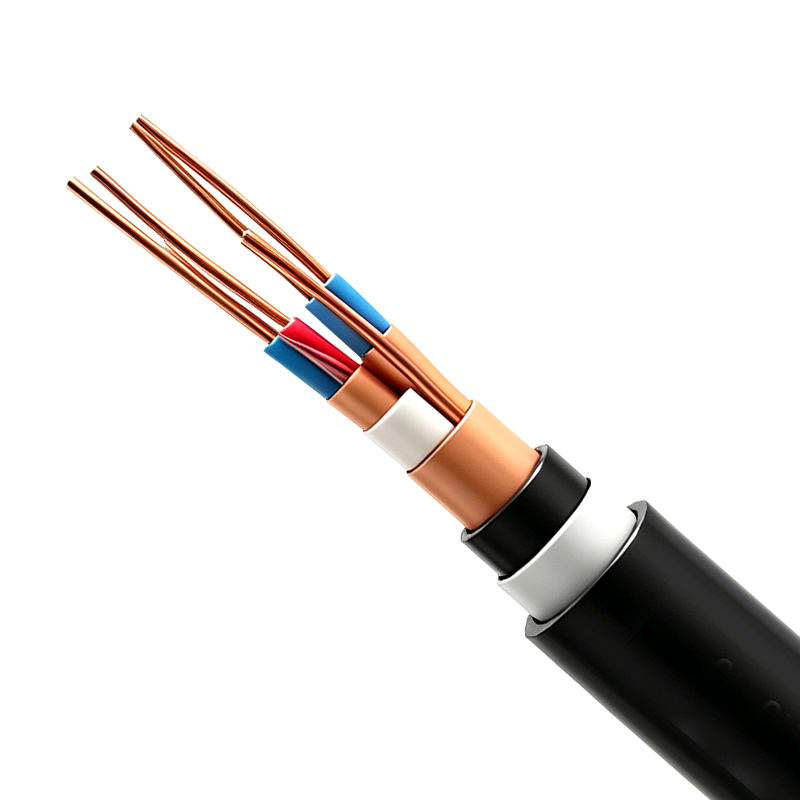
Our computer and instrument shielded cable is built for exactly this duty, keeping signal conductors separated from electrical noise inside control and measurement cabinets.
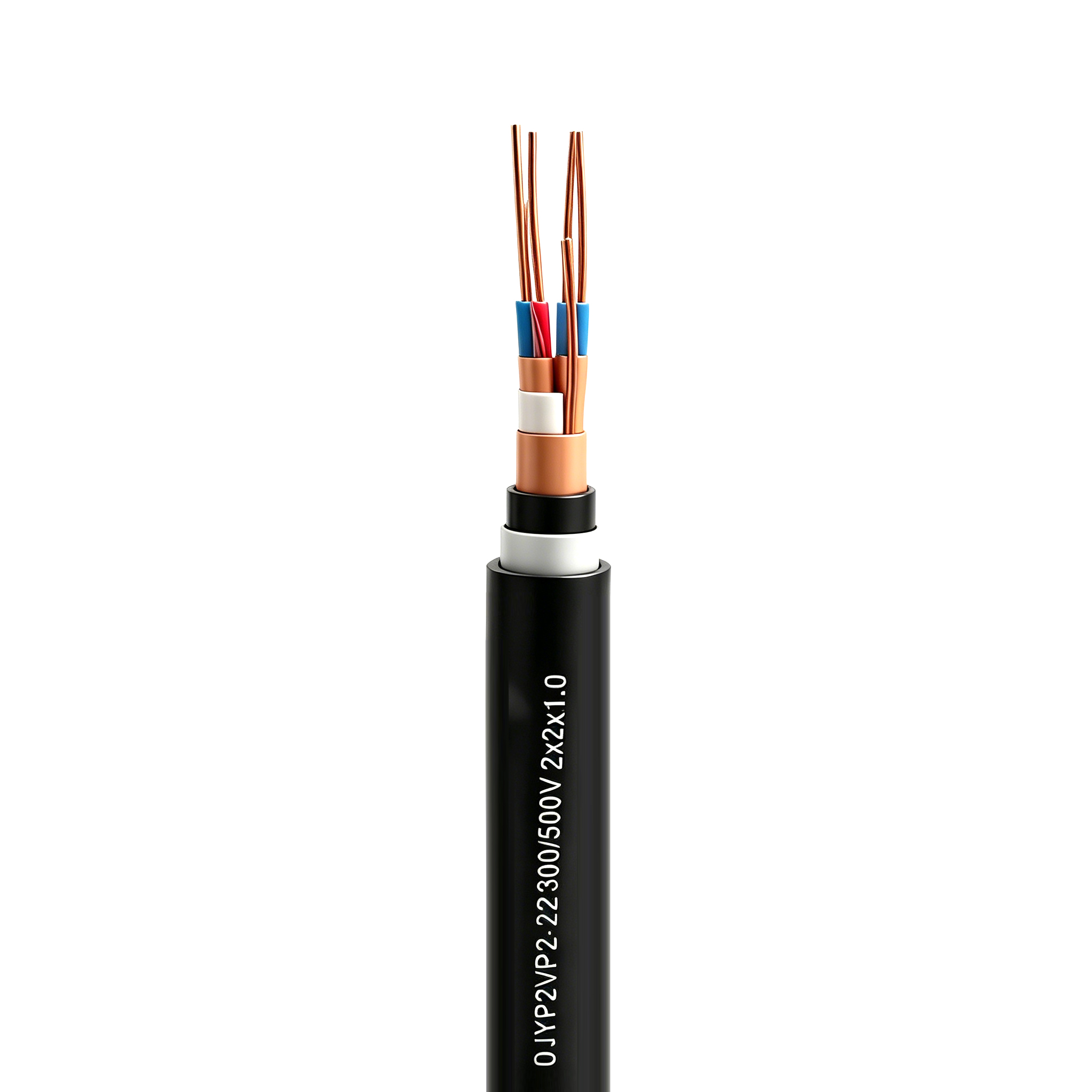 Computer and Instrument Shielded Cable for Control CabinetsLow-voltage signal cable for computers, instruments, and automation systems, with shielding options to preserve signal integrity in noise-prone control and measurement cabinets.View Product →
If the signal is differential and the run is short, a shielded pair is usually enough. If it is single-ended, or the route passes close to a drive output, the shield type and the way it is grounded matter far more than the conductor size.
Specifying a Two-Conductor Shielded Cable
Most enquiries we receive list only the conductor count and size, which leaves the important decisions to whoever answers the phone. These are the points worth writing into a specification before you ask for a quotation.
| Parameter | What to confirm | Why it matters |
|---|---|---|
| Conductor size | 16, 18, 20 or 24 AWG stranded copper | Sets loop resistance and voltage drop on long runs |
| Insulation | PVC, PE or XLPO | Affects dielectric strength, temperature rating and flexibility |
| Shield | Foil, braid, or foil plus braid | Determines performance against high and low frequency noise |
| Drain wire | Stranded tinned copper bonded to the foil | Provides a dependable termination point for the shield |
| Pair construction | Twisted pair with a controlled lay length | Twisting is what cancels magnetically induced noise |
| Jacket and rating | PVC, LSZH or PUR; 300 V to 450/750 V | Matches the environment and the insulation requirement of the circuit |
Adding the ambient temperature, the installation method and whether the cable will be fixed or flexed removes most of the guesswork and usually shortens the quotation cycle considerably.
Installation Habits That Keep the Shield Useful
A well-made shielded cable can still behave badly if it is installed carelessly. These are the mistakes we hear about most often during commissioning.
- Keep signal cables at least 300 mm from drive output cables where tray space allows, and cross power cables at right angles rather than running parallel.
- Strip the jacket back only as far as the terminal needs. A long exposed drain wire acts as an antenna and picks up the noise the shield was meant to block.
- Terminate the drain wire at one point on a dedicated signal earth, and keep the pigtail shorter than about 50 mm.
- Use metal glands or clamps on screened entries so the shield is bonded to the enclosure, then check continuity from the gland to the earth bar.
- Never use the drain wire as a current-carrying conductor or as a protective earth.
Shielded Pair, Control Cable or Signal Cable
These three names get used almost interchangeably in project documents, which causes real problems at the quotation stage. A control cable is generally a multi-core cable used to switch or interlock equipment, and it may or may not be shielded. A signal cable is built for low-level analogue or digital transmission and almost always includes a shield. A two-conductor shielded cable is simply the smallest and most common form of the latter. Our note on the difference between control cables and signal cables walks through construction, voltage rating and shielding expectations for each type.
We also manufacture plastic insulated control cable for panel and machine wiring where several independent control circuits share one jacket.
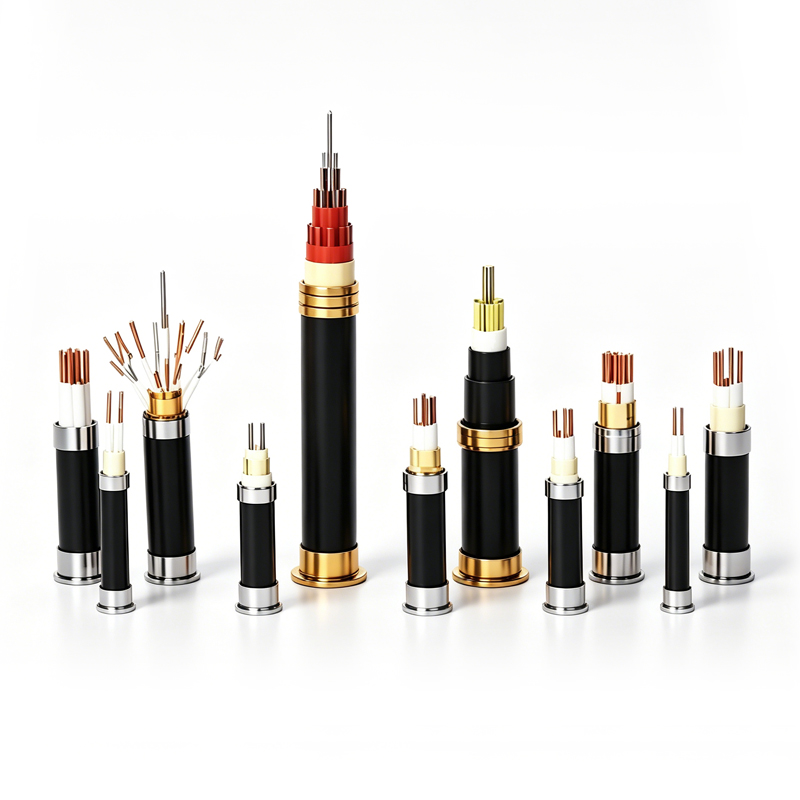 Plastic Insulated Control Cable for Panel and Machine WiringControl and signal cable series for automated equipment, relay protection, and monitoring circuits, available with PVC or XLPE insulation and shielding or armor options.View Product →
The rule we give customers is simple: if the conductor carries information, shield it and keep it away from power. If it carries a command that only has to open or close a contactor, a control cable is usually the more economical choice.
When Two Conductors Are Not Enough
The most common failure we see with shielded pairs is not a manufacturing defect. It is a mismatch between the cable and the noise source. A foil shield does very little against the magnetic field of an unscreened motor cable, and twisting will not fix a ground loop created by bonding a shield at both ends of a building. When a cable has to run beside a variable frequency drive, the drive manual usually asks for a symmetrical cable with a copper braid and symmetrical earth conductors. We build a variable frequency drive cable rated up to 6 kV for that duty, with the shield and earthing arrangement designed to handle the common mode currents a drive generates.
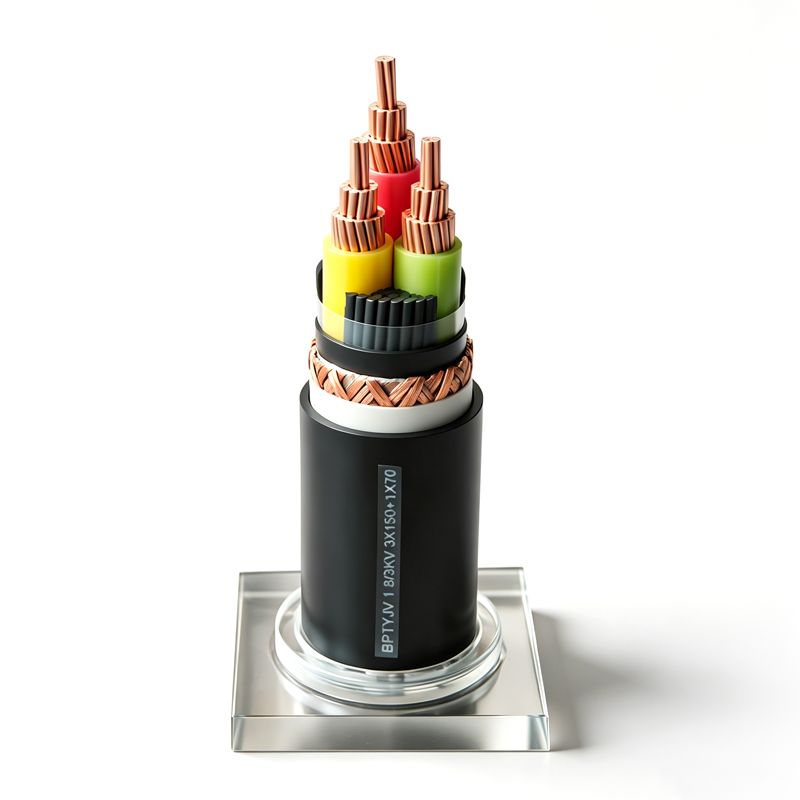 Variable Frequency Drive Cable Rated up to 6 kVVFD power cable for frequency control systems, designed to withstand high-frequency pulse voltages and suppress electromagnetic interference between frequency transformers and motors.View Product →
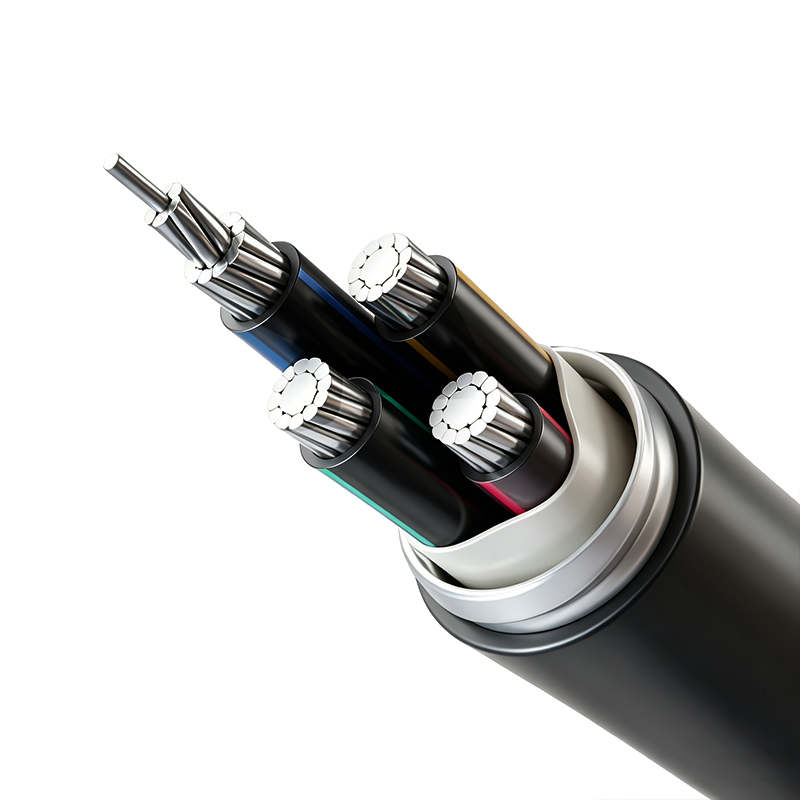
The same logic applies in fire-risk areas and on outdoor runs. Where a circuit must keep working during a fire, or where rodents and termites are a known problem, a standard shielded pair is the wrong starting point and a purpose-built specialty cable should be selected instead.
How We Build and Check Shielded Cables
Wuxi Guanghuan Cable has produced wire and cable in Guanlin Town, Yixing, since 1998. Our published information describes more than 100 product types and around 30,000 specifications across power cables, electrical equipment cables, overhead conductors and specialty cables, made on over 70 production and testing lines.
For shielded constructions, the checks that matter are unglamorous but essential: conductor diameter and strand count, capacitance and insulation resistance on the finished pair, shield coverage and drain wire continuity, and a final inspection on the reel. Our quality system is certified to ISO 9001, ISO 14001, ISO 45001 and ISO 50001, and our products carry TUV certification along with Chinese energy-saving and carbon footprint certification. More detail is available on our factory page.
A two-conductor shielded cable is a small purchase with a large influence on how a measurement system behaves. Get the shield type, the twist and the grounding right, and it quietly does its job for years. Get them wrong, and no amount of filtering in the PLC will fully compensate.
If you are specifying a shielded pair for a new panel, a retrofit or an export project, our team is glad to review the requirement and confirm what we can supply.

Copyright © Wuxi Guanghuan Cable Co., Ltd. All Rights Reserved. Power Cables Manufacturer Electrical Wire And Cable Factory

