


 English
 中文简体
中文简体 русский
 Español
 عربى
عربى
XLPE/PVC Insulated Power Cable Supplier
- Rated Voltage 3.6/6kV–26/35kV XLPE Insulated Power Cable
- Rated Voltage 0.6/1kV XLPE Insulated Power Cable
- Rated Voltage 0.6/1kV PVC Insulated Power Cable
- Rated Voltage 1.8/3kV XLPE Insulated Power Cable
- Rated Voltage 1.8/3kV PVC Insulated Power Cable
- Aluminum Alloy Conductor Plastic Insulated Power Cable (Rated Voltage up to 26/35kV)
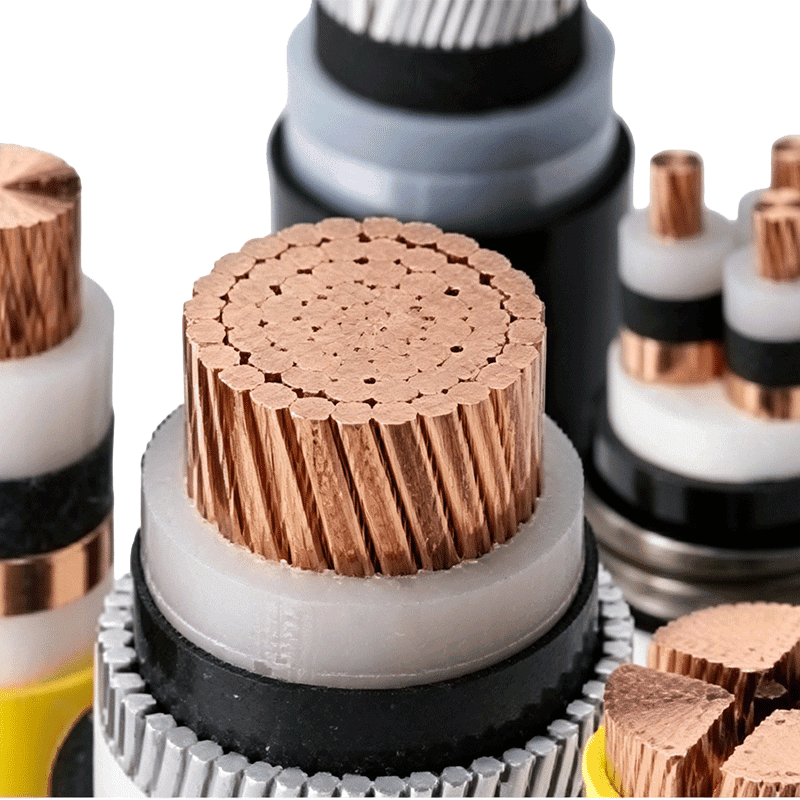
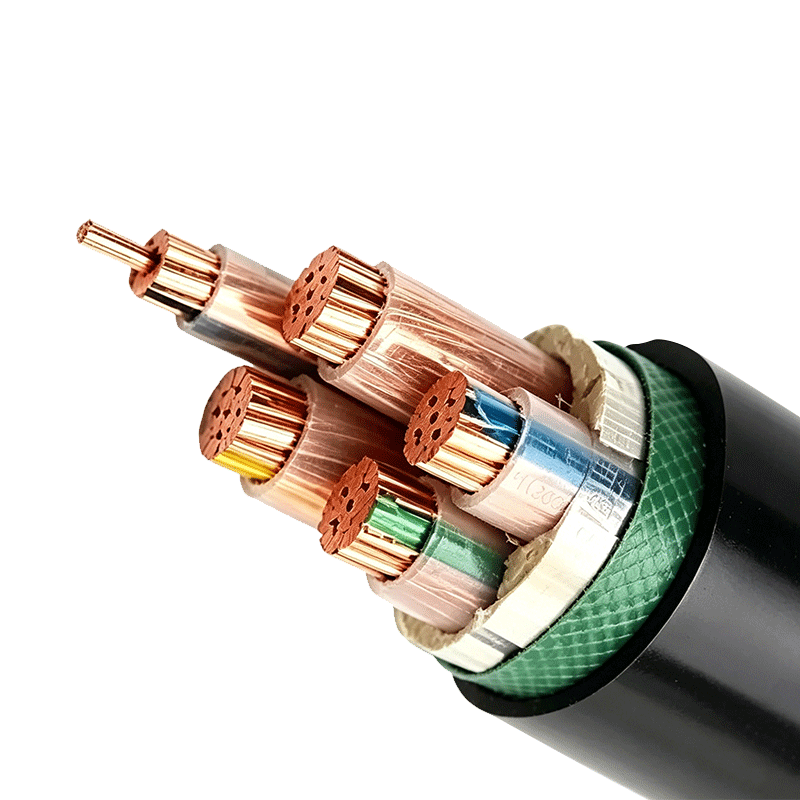
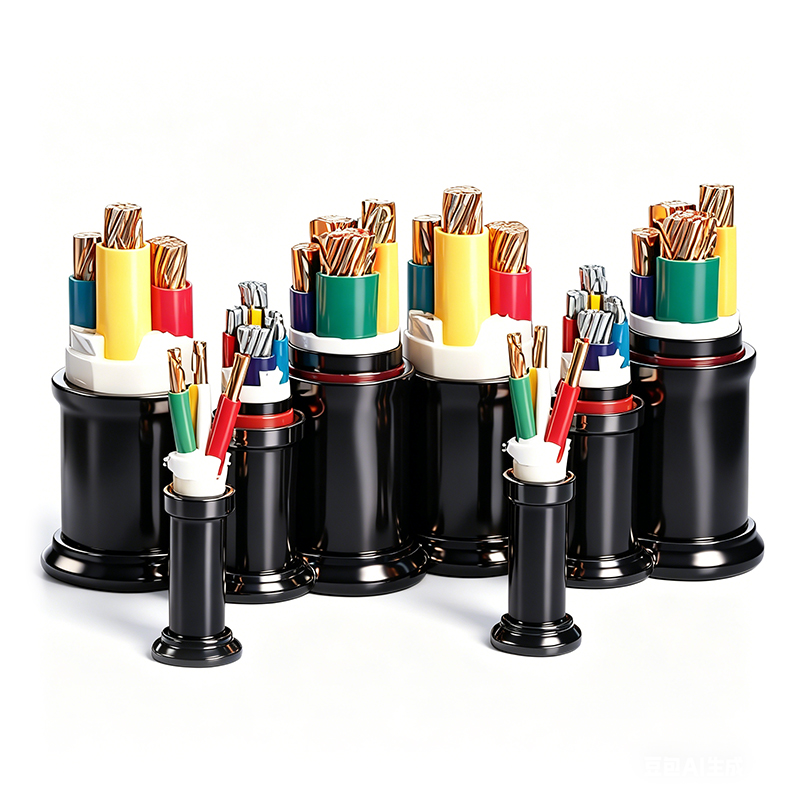
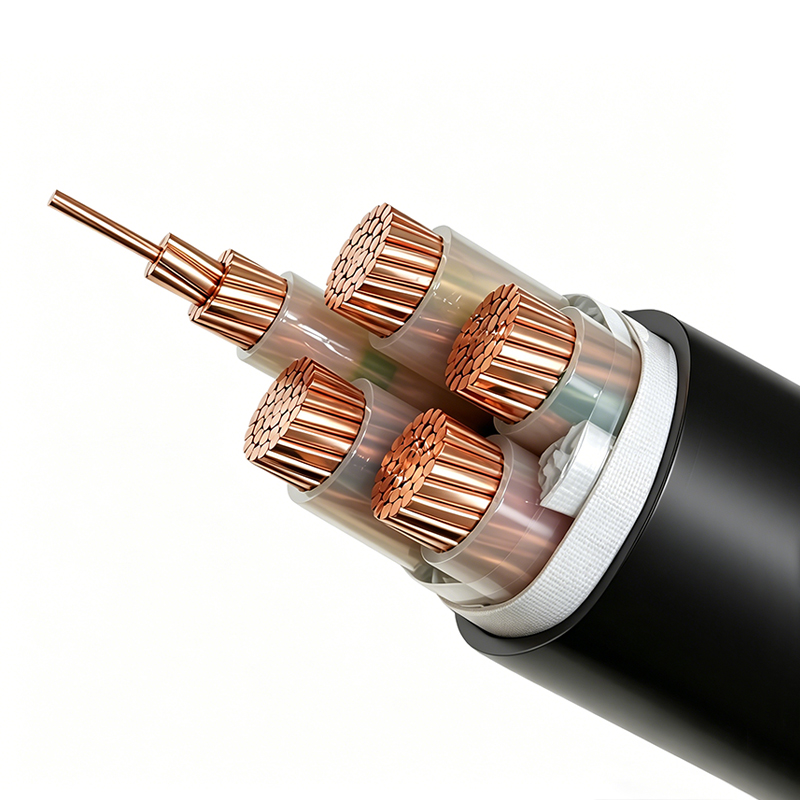
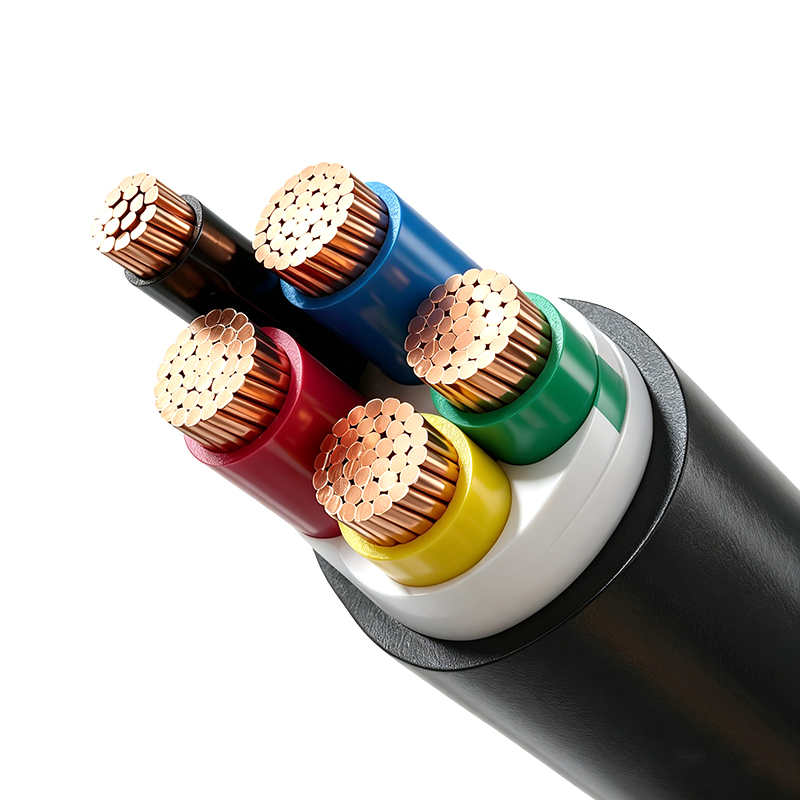
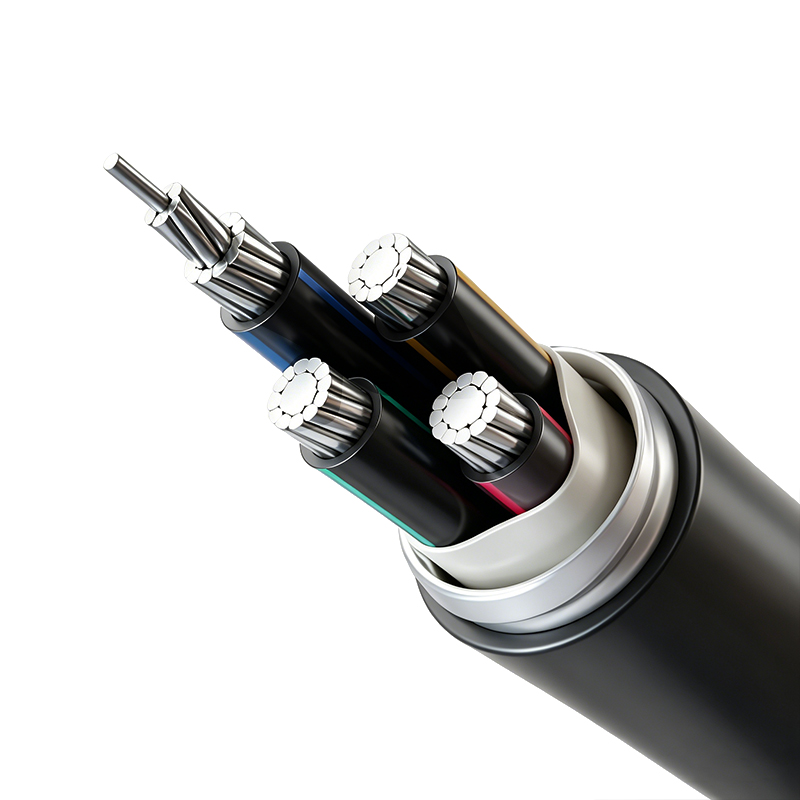
The power cables produced by our company strictly comply with national standards such as GB/T 12706 and relevant industry specifications. At the same time, products can also be manufactured in accordance with international standards including those recommended by the International Electrotechnical Commission (IEC), as well as British, German, and American standards according to customer requirements. A refined full-process manufacturing system is adopted to maintain stable and reliable product quality.
The core conductor of the cable is made from 99.99 percent high-purity oxygen-free copper or high-quality aluminum alloy rod. Through processes including wire drawing, annealing, and layered stranding, the conductor achieves high electrical conductivity, low resistance loss, and mechanical strength, supporting efficient and energy-saving power transmission.
The insulation layer is manufactured from environmentally friendly cross-linked polyethylene (XLPE) material. It is formed through a high-temperature cross-linking extrusion process, providing strong insulation performance, good aging resistance, and a wide operating temperature range from −40°C to 90°C, which helps reduce the risk of electrical leakage.
The outer sheath is produced from flame-retardant polyvinyl chloride (PVC) or low-smoke halogen-free flame-retardant materials, offering multiple protective features including wear resistance, weather resistance, corrosion resistance, and protection against rodents and termites. These characteristics allow the cables to adapt to complex installation environments.
The product range covers low-voltage and medium-voltage levels from 1 kV to 35 kV, with conductor configurations ranging from single core to five cores and a wide range of cross-section sizes. The cables are suitable for direct underground burial, cable tray installation, conduit installation, and overhead laying, supporting various installation conditions.
These products are widely used in urban power distribution networks, industrial plant power supply systems, commercial complex distribution systems, residential community power transmission, rail transit projects, and municipal infrastructure construction.
During production, a complete online monitoring system is applied throughout the entire manufacturing process. From raw material inspection and process control at each production stage to finished product testing such as withstand voltage testing, insulation resistance testing, and partial discharge testing, every step is strictly monitored. This ensures that each batch of products meets national standards and provides safe, stable, and long-term reliability for various power transmission projects.
Wuxi Guanghuan Cable Co., Ltd., founded in 1998. XLPE Insulated Power Cables Supplier and PVC Insulated Power Cable Supplier in China. The company's core business products cover various sectors of the power system, with R&D and manufacturing capabilities for over 100 varieties and more than 30,000 specifications, including medium and high voltage power cables, wires and cables for electrical equipment, bare conductors and overhead insulated cables, high-speed railway/urban rail transit cables, as well as smart manufacturing for advanced energy storage, photovoltaics, and wind power.
Guanghuan Cable currently has a standardized production base and has built a full-chain industrial system covering R&D, production, and testing. It occupies an area of over 100,000 square meters with a building area of more than 45,000 square meters. Wholesale PVC Insulated Power Cables. The company owns over 70 advanced production and testing equipment lines, employs more than 140 staff, and achieves an annual output value exceeding 3 billion RMB.
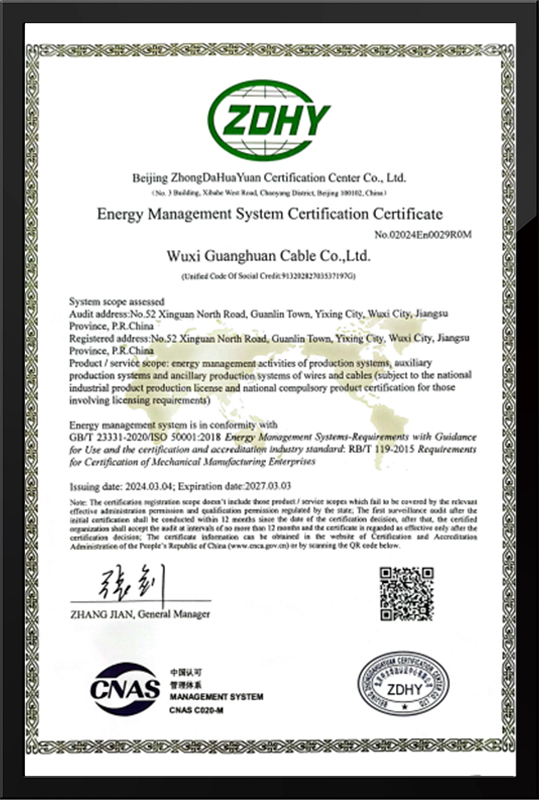
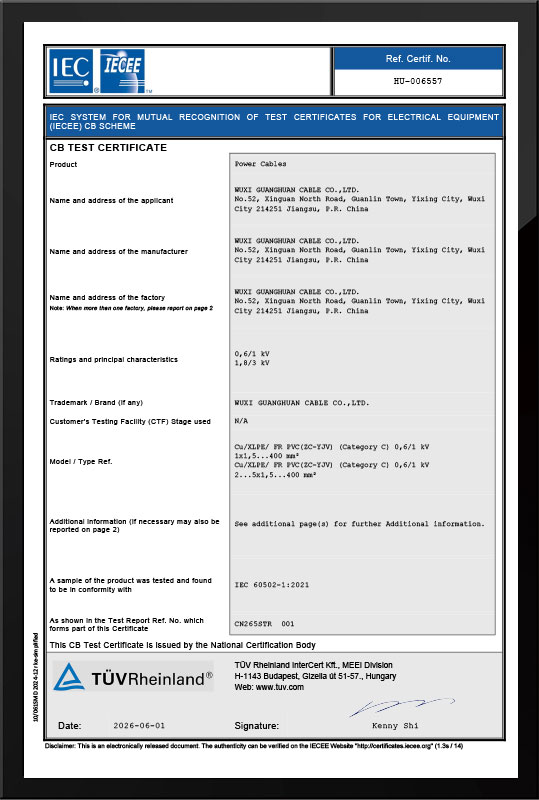
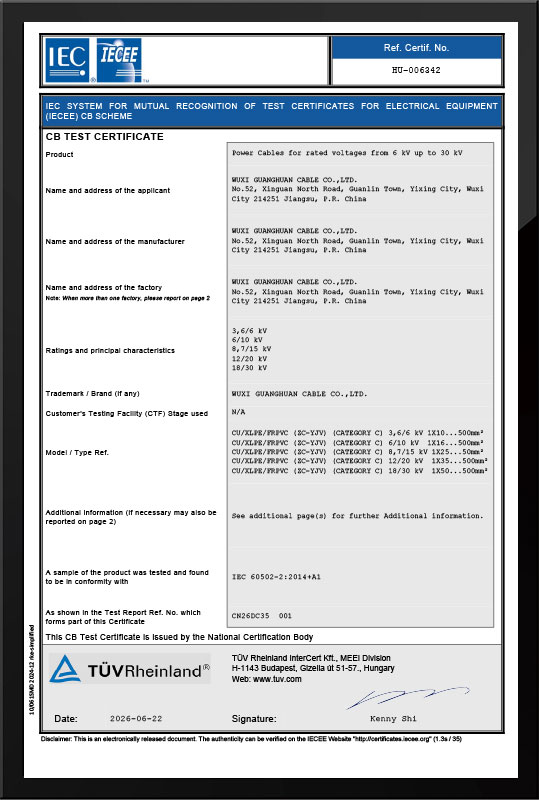
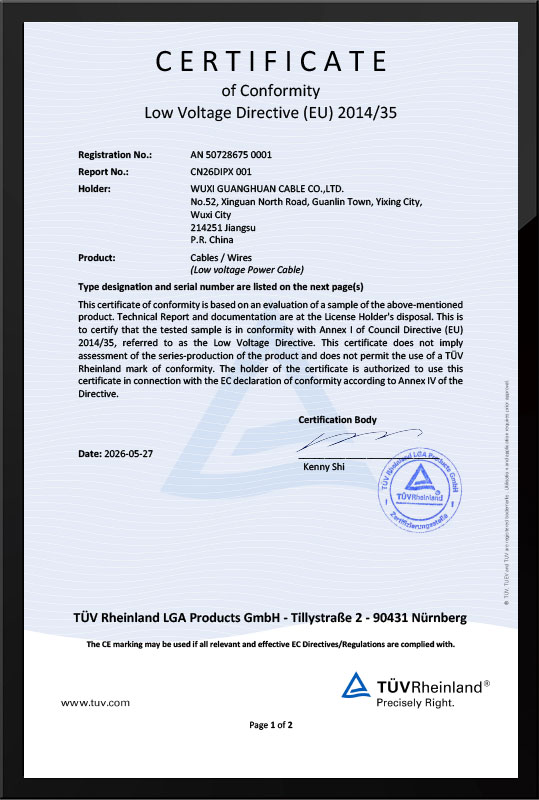
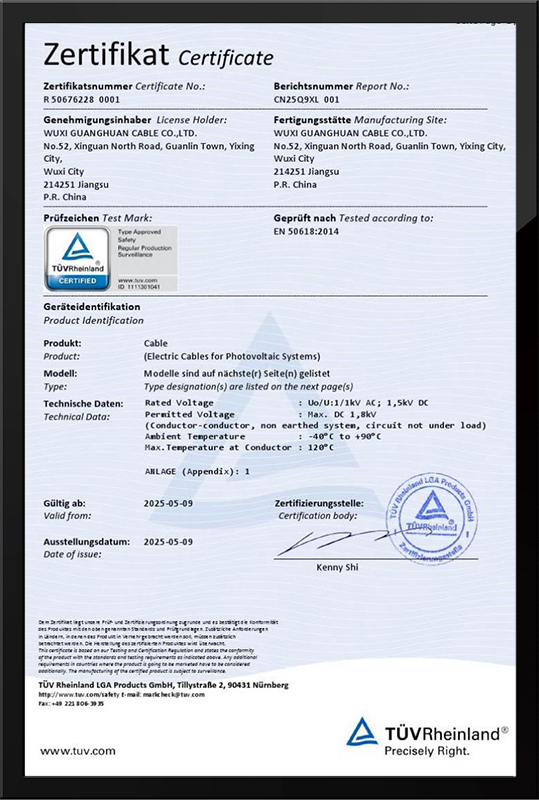
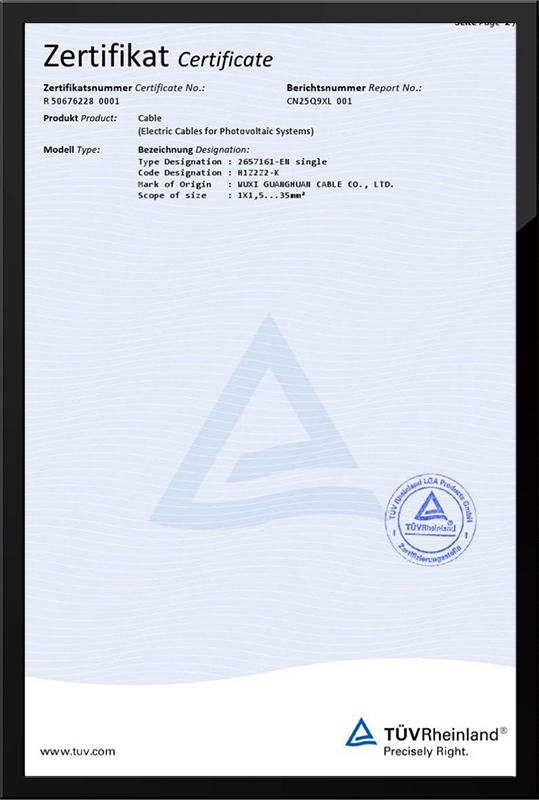
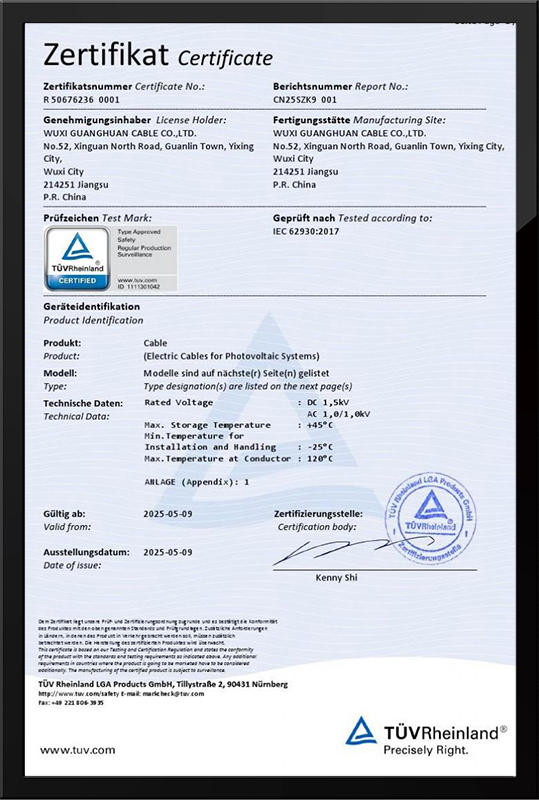
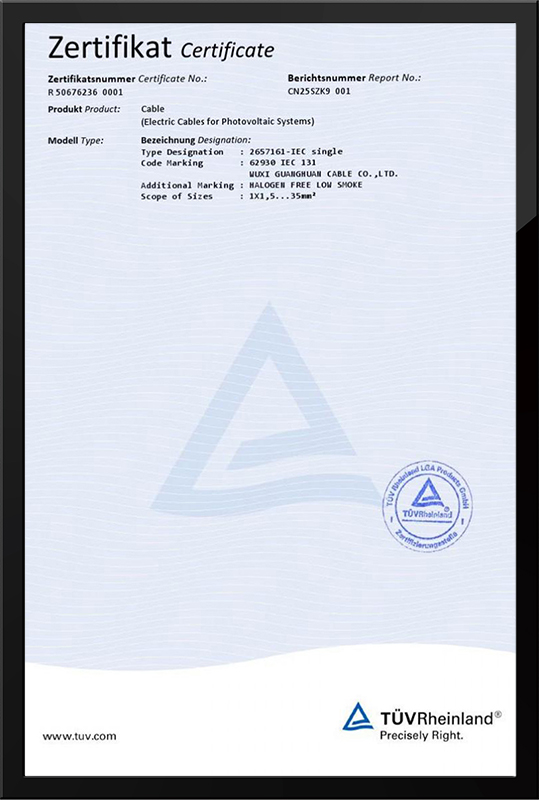
The company has obtained certifications including ISO 9001 (Quality Management System), ISO 14001 (Environmental Management System), ISO 45001 (Occupational Health and Safety Management System), ISO 50001 (Energy Management System), GB/T 29490 (Intellectual Property Management System), Green Management System Certification, Social Responsibility Management System Certification, and After-Sales Service Management System Certification. As XLPE Insulated Power Cables Factory. Its products have obtained international certifications such as the German Rheinland TÜV certification.
 View All News
-
Industry News
-
Industry News
-
Industry News
-
Industry News
-
Industry News
Industry knowledge
Understanding Power Cables and the Role of Insulation Materials
Power cables form the physical foundation of every electrical distribution system, carrying current from generation sources to substations, factories, and homes. While conductor material and cross-sectional area determine how much current a cable can carry, the insulation material determines how safely and reliably that cable performs under real-world conditions. Two insulation types dominate the industry today: cross-linked polyethylene, commonly known as XLPE, and polyvinyl chloride, known as PVC. Understanding the differences between these materials is essential for engineers, contractors, and procurement teams selecting cable for a specific application.
Wuxi Guanghuan Cable Co., Ltd., established in 1998, has spent over two decades developing expertise in both insulation technologies. As an XLPE insulated power cable supplier and PVC insulated power cable supplier in China, the company produces cable across more than 100 varieties and 30,000 specifications, giving customers the flexibility to select the right insulation type for medium and high voltage power systems, industrial equipment, and infrastructure projects.
What Makes XLPE Insulated Power Cable a Preferred Choice for High Voltage Applications
XLPE insulation is created by chemically cross-linking polyethylene molecules, which transforms the material's structure and significantly improves its thermal and electrical performance. This process gives XLPE insulated power cable several advantages that make it the preferred choice for demanding power transmission applications.
Higher Temperature Tolerance
XLPE insulation can typically withstand higher continuous operating temperatures than PVC, which allows cables to carry more current without insulation degradation. This makes XLPE cable well suited for medium and high voltage power transmission, where sustained current loads generate significant heat over long operating periods.
Superior Electrical Properties
XLPE has lower dielectric losses and better insulation resistance compared to PVC, which is particularly important for high voltage systems where electrical stress on the insulation is greater. These properties reduce energy losses during transmission and support longer cable service life, especially in outdoor and underground installations exposed to varying environmental conditions.
Resistance to Moisture and Chemical Exposure
XLPE insulated power cable also demonstrates strong resistance to moisture absorption and many chemical agents, making it a dependable option for underground cable runs and installations near industrial facilities where chemical exposure is a concern.
Why PVC Insulated Power Cable Remains a Practical Solution
Despite the advanced properties of XLPE, PVC insulated power cable continues to serve an important role across many low and medium voltage applications. PVC has been used in cable manufacturing for decades, and its performance characteristics make it a cost-effective and practical choice for a wide range of projects.
Cost-Effective for Lower Voltage Applications
PVC insulation is generally less expensive to produce than XLPE, making PVC insulated power cable an economical choice for building wiring, control circuits, and other lower voltage applications where the extreme performance demands of high voltage transmission are not present.
Good Flexibility and Ease of Installation
PVC cable tends to be more flexible than XLPE cable, which can simplify installation in tight spaces, conduit runs, and applications requiring frequent bending during installation. This flexibility is valuable for electricians and contractors working in confined or complex wiring environments.
Inherent Flame Retardant Properties
PVC naturally resists combustion better than many other plastics, giving PVC insulated power cable a degree of built-in fire safety that is beneficial in residential and commercial building applications where fire code compliance is a priority.
Comparing XLPE and PVC Insulated Power Cable Side by Side
Choosing between these two insulation types often comes down to voltage requirements, installation environment, and budget considerations. The table below summarizes key differences to help guide the decision-making process.
| Characteristic | XLPE Insulated Power Cable | PVC Insulated Power Cable |
| Typical Operating Temperature | Higher continuous rating | Lower continuous rating |
| Common Voltage Range | Medium to high voltage | Low to medium voltage |
| Flexibility | Moderate | Higher |
| Moisture and Chemical Resistance | Strong | Moderate |
| Typical Cost | Higher | Lower |
| Common Applications | Power transmission, underground and outdoor installations | Building wiring, control circuits, indoor installations |
Key Factors to Evaluate When Working with an XLPE/PVC Insulated Power Cable Supplier
Selecting the right insulation type is only part of the decision. Choosing a reliable XLPE/PVC insulated power cable supplier is equally important, since manufacturing quality directly affects cable performance and lifespan. Buyers should consider the following factors when evaluating potential suppliers.
Range of Specifications Available
Projects often require multiple cable types and sizes across a single installation. A supplier offering both XLPE and PVC options across thousands of specifications, such as Wuxi Guanghuan Cable's catalog of more than 30,000 specifications, allows buyers to source multiple cable types from one manufacturer rather than coordinating between several vendors.
Manufacturing Consistency and Testing
Insulation performance depends heavily on manufacturing precision, including consistent wall thickness, proper cross-linking in XLPE production, and stable material composition in PVC compounds. Suppliers with integrated research, production, and testing systems are better positioned to catch inconsistencies before cable reaches the field.
Experience Across Multiple Sectors
A supplier with experience serving diverse sectors, including medium and high voltage power systems, wires and cables for electrical equipment, bare conductors and overhead insulated cables, and high-speed railway or urban rail transit cables, demonstrates the technical versatility needed to handle specialized project requirements. This breadth of experience often translates into better problem-solving support during project planning and specification selection.
Matching Cable Insulation to Application Requirements
The decision between XLPE and PVC insulated power cable should always be guided by the specific demands of the application rather than a general preference for one material. Below are practical scenarios that illustrate how this decision typically plays out in the field.
- Underground high voltage transmission lines generally favor XLPE insulated power cable due to its superior thermal and moisture resistance
- Indoor residential and commercial building wiring often uses PVC insulated power cable for its flexibility and flame retardant properties
- Industrial facilities with chemical exposure risks typically benefit from the chemical resistance offered by XLPE insulation
- Projects with tight budget constraints and lower voltage requirements may find PVC insulated power cable to be the more economical solution
- Renewable energy installations, including photovoltaic and wind power systems, frequently require specialized cable solutions that account for outdoor exposure and long-term durability
Building a Long-Term Partnership with a Trusted Cable Supplier
Power cable procurement is rarely a one-time transaction. Infrastructure projects, industrial facilities, and utility operators typically require ongoing cable supply for expansion, maintenance, and replacement over many years. Working with a manufacturer capable of supplying both XLPE and PVC insulated power cable simplifies this long-term relationship, since project teams can rely on a single, consistent source for multiple cable types rather than managing separate supplier relationships for different insulation materials.
Wuxi Guanghuan Cable's research and development capabilities, combined with its manufacturing capacity across more than 100 product varieties, position the company to support this kind of long-term partnership. As power systems continue to expand and diversify, particularly with growing investment in energy storage, photovoltaic, and wind power infrastructure, having a supplier capable of adapting to evolving technical requirements becomes increasingly valuable.
Final Thoughts on Selecting the Right Power Cable Insulation
Both XLPE and PVC insulated power cable serve important, complementary roles in electrical infrastructure. XLPE offers superior thermal performance and electrical properties suited to high voltage and demanding environments, while PVC provides a flexible, cost-effective solution for lower voltage and indoor applications. Rather than viewing one material as universally superior, engineers and procurement teams should evaluate each project's voltage requirements, installation environment, and budget to determine the appropriate insulation type.
Partnering with an experienced XLPE/PVC insulated power cable supplier that understands these distinctions, and can manufacture both types to consistent quality standards, helps ensure that whichever insulation is selected, the resulting cable performs reliably throughout its service life.

Copyright © Wuxi Guanghuan Cable Co., Ltd. All Rights Reserved. XLPE Insulated Power Cables Supplier PVC Insulated Power Cable Factory

