


 English
 中文简体
 русский
 Español
 عربى

Types of Cables Used in Subway Tunnels: A Complete Selection Guide for Metro Projects
Content
- 1 Why Tunnel Cable Selection Is Different
- 2 The Main Types of Cables Used in Subway Tunnels
- 3 Medium-Voltage Distribution and DC Traction Cables
- 4 Control, Signaling and Communication Cables
- 5 Fire-Resistant and Flame-Retardant Cables
- 6 Protection Against Water, Rodents and Mechanical Damage
- 7 A Specification Checklist for Tunnel Projects
- 8 Choosing a Cable Partner for Tunnel Work
A subway tunnel is one of the harshest places to install an electrical cable. The space is confined, the atmosphere is humid and often chemically aggressive, maintenance access is limited to a few hours at night, and a single failure during service hours can strand thousands of passengers underground. Tunnels also vibrate, carry stray traction currents, and must remain passable for evacuation if a fire breaks out.
That is why no metro project is built with a single "tunnel cable". A modern line uses several cable families at once: medium-voltage distribution cables, DC traction cables, low-voltage auxiliary power cables, control and signaling cables, fire-resistant cables for life-safety circuits, and communication cables such as radiating coaxial cable. The sections below explain what each type does and which properties decide whether it belongs in a tunnel specification.
Why Tunnel Cable Selection Is Different
Before comparing products, it helps to understand the conditions a tunnel imposes on every cable installed inside it.
- Fire and smoke behavior. Cables are among the largest fuel loads in a tunnel, so flame spread, heat release, smoke density and acid gas emission are treated as primary design criteria rather than optional extras.
- Moisture and groundwater. Many tunnels sit below the water table, and cable routes often pass through drainage zones where water is present for decades.
- Restricted space. Bracket spacing, bending radius and tray loading are all tight, which favors cables with predictable, tested installation characteristics.
- Vibration and movement. Continuous train vibration and tunnel breathing require flexible conductors and correctly spaced cleats.
- Stray currents and interference. Traction return currents and variable-frequency drives create electrical noise, so screening and grounding practice matter as much as the cable itself.
- Long service life. Design life is typically 30 to 50 years with almost no opportunity to re-pull a cable, so ageing performance outweighs first cost.
Metro specifications therefore lean on a familiar set of standards: IEC 60502-2 for medium-voltage cables, IEC 60332-1 and IEC 60332-3 for flame propagation, IEC 60331 for circuit integrity under fire, IEC 60754 for halogen acid gas and IEC 61034 for smoke density. A data sheet should be read against these test results, not against marketing language.
The Main Types of Cables Used in Subway Tunnels
The table below summarizes the cable types normally found along a metro tunnel route, together with the duty each one performs. The list is organized by function, because two cables with identical voltage ratings can have very different jobs underground.
| Cable type | Primary duty | Typical construction | Voltage or signal class |
|---|---|---|---|
| Medium-voltage distribution cable | Feeds traction and station substations along the line | Single-core or three-core XLPE insulation, metallic screen, LSZH or PVC oversheath | 3.6/6 kV to 26/35 kV |
| DC traction power cable | Feeds the third rail or overhead contact line | Single-core XLPE insulation with heavy screen or concentric conductor | 750 V or 1500 V DC |
| Low-voltage auxiliary power cable | Lighting, pumps, ventilation, escalators, station services | Copper conductor, PVC or XLPE insulation, often armored | 450/750 V and 0.6/1 kV |
| Control cable | Switching and control of fans, pumps, doors and switchgear | Multi-core, PVC or XLPO insulation, optional braided screen | 450/750 V |
| Instrumentation and shielded signal cable | Sensors, SCADA outstations, condition monitoring | Twisted pairs with individual and overall screen | 300/500 V |
| Radiating coaxial cable (leaky feeder) | Continuous radio coverage for train and staff communications | Coaxial construction with slotted outer conductor | Radio frequency signals |
| Fire-resistant cable | Emergency lighting, smoke extraction, fire pumps, evacuation systems | Mica tape fire barrier, LSZH sheath | 0.6/1 kV |
| Flame-retardant LSZH cable | General tunnel circuits where smoke emission must stay low | Low-smoke zero-halogen compound, low acid gas emission | 0.6/1 kV |
A single tunnel section may contain all eight families. The groups that demand the most careful specification are described next.
Medium-Voltage Distribution and DC Traction Cables
XLPE-insulated distribution cables
Traction substations are usually spaced one to two kilometres apart and connected to the public grid through a medium-voltage ring. Those ring and feeder circuits are almost always XLPE-insulated cables rated between 3.6/6 kV and 26/35 kV, laid either as single-core cables in trefoil formation or as three-core cables with a common metallic screen. The screen carries earth fault current and controls the electric field, so its cross-section has to be specified rather than assumed.
DC traction power cables
The second major power family feeds the running rails. Third-rail systems typically operate at 750 V DC, while overhead contact line systems commonly run at 1500 V DC. These are normally single-core cables with heavy copper screens or concentric conductors, chosen mainly to limit stray current corrosion of tunnel linings, reinforcement and buried metalwork. Insulation is usually XLPE, with low-smoke zero-halogen sheathing wherever the operator requires reduced smoke in an emergency.
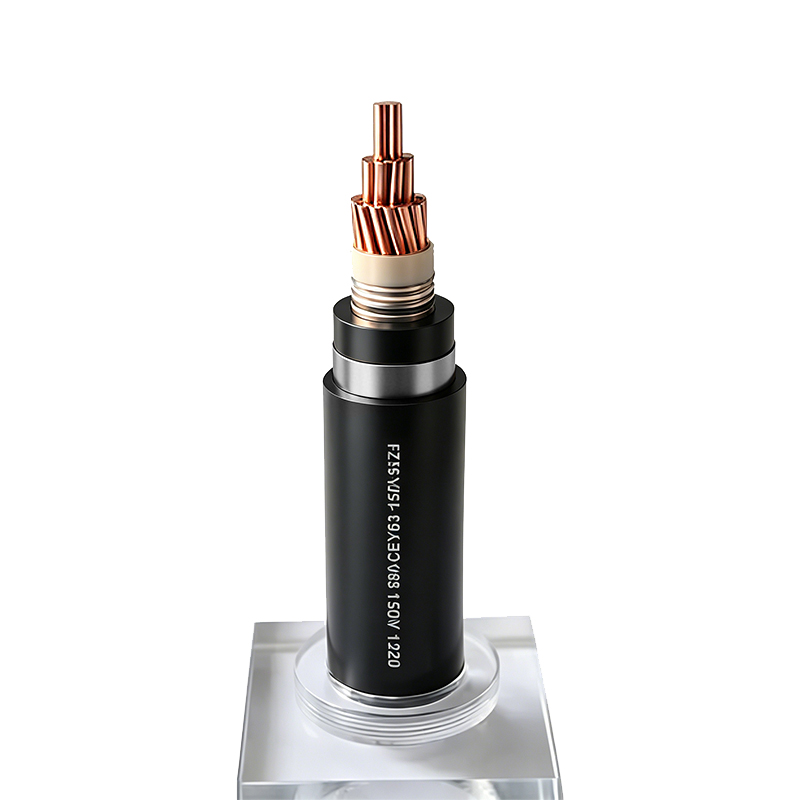 Power Cable for Subway and Urban Rail Transit (Rated Voltage 35kV)Product Overview Power cables for subway and light-weight track (35kV) are critical power transmission components specifically engineered for urban rail transit system...View Product →
Control, Signaling and Communication Cables
Control cables
Control cables operate the equipment that keeps a tunnel habitable: ventilation fans, drainage pumps, platform screen doors, lighting contactors and switchgear. They are multi-core, generally rated 450/750 V, with PVC, cross-linked polyolefin or LSZH insulation. Where variable-frequency drives are involved, a braided or foil screen is added to contain switching noise.
Shielded instrumentation and signal cables
Shielded instrumentation cables carry low-level measurement and control signals between sensors, monitoring units and SCADA outstations. The usual construction is twisted pairs with individual and overall screens plus a drain wire, rated 300/500 V. The screen is there to keep interference out rather than to carry fault current, and it must be earthed at one end only to avoid circulating currents along the tunnel.
Radiating coaxial cable
Radio signals do not travel far around tunnel bends, so metros use radiating coaxial cable, often called leaky feeder cable, mounted along the tunnel wall. Its slotted outer conductor lets the cable act as a long antenna, providing continuous coverage for train-to-ground communication and emergency services radio.
 Computer and Instrument Shielded CableProduct Overview Computer and instrument shielded cables are specialized low-voltage signal transmission wires designed for electronic computers, electrical instrument...View Product →
Fire-Resistant and Flame-Retardant Cables
Flame retardant and fire resistant are not the same thing. A flame-retardant cable resists flame propagation, verified by IEC 60332-1 for a single cable and IEC 60332-3 for a vertical bundle, but it is not required to keep working during a fire. A fire-resistant cable adds a mica tape barrier around the conductor so the circuit continues to function for a defined period, commonly 30, 60 or 120 minutes when tested to IEC 60331. Emergency lighting, smoke extraction fans, fire pumps, evacuation lifts and tunnel communications are normally wired with fire-resistant cable for this reason.
Smoke is the other half of the equation. Low-smoke zero-halogen compounds limit halogen acid gas to IEC 60754 and smoke density to IEC 61034, which keeps escape routes and firefighting access usable. If you are weighing these grades for a specific route, our overview of three principles for selecting flame-retardant cables is a useful starting point.
 Flame-Retardant and Fire-Resistant Cable SeriesProduct Overview In modern architectural and industrial safety systems, the fire performance of cables is the cornerstone of minimizing fire-related losses and securin...View Product →
Protection Against Water, Rodents and Mechanical Damage
Fire performance is only part of the specification. Tunnels combine damp air, drainage water, rodent activity and constant mechanical stress, so the outer layers of the cable do real work:
- Water-blocking tapes or swelling powder in the conductor interstices, for routes below the water table.
- Steel tape or steel wire armoring where cables are buried in the invert or exposed to impact.
- Termite and rodent resistant sheathing in tunnels that pass through soil, old fill or vegetated cuttings.
- Correct cleat spacing and fire-stop sealing at every wall penetration, so a cable fire cannot spread between sections.
A Specification Checklist for Tunnel Projects
When you prepare a cable schedule for a metro tunnel, work through the following points before releasing the enquiry:
- Separate circuits by function: traction power, auxiliary power, control, signal and communication.
- Confirm the voltage class, conductor material and screen cross-section required by the earthing and stray current study.
- State the fire performance needed for each circuit: flame retardant, fire resistant with circuit integrity time, or both.
- Specify smoke and acid gas limits, for example IEC 61034 and IEC 60754, for all cables in occupied areas.
- Define the environmental protection: water blocking, armoring, rodent resistance.
- Check bending radius and cleat spacing against the actual tunnel cross-section and bracket layout.
- Ask for type test reports and third-party certification, not just a catalogue description.
Choosing a Cable Partner for Tunnel Work
Tunnel cable is a long-term commitment, and it pays to source it from a manufacturer who understands metro duty profiles rather than one who simply quotes a voltage. Our own manufacturing base in Guanlin, Yixing, known across the industry as China Cable City, has been producing power, equipment, overhead and specialty cables since 1998, with the medium-voltage, control, fire-resistant and rail transit constructions that tunnel projects typically require. Quality, environmental, occupational health, energy and intellectual property management systems are certified to ISO standards, and products carry third-party approvals including TUV certification, which matters when a specification has to be defended at design review.
If you are assembling a cable schedule for a subway tunnel, send us the circuit list and the fire performance requirements. We will help you match each route to a cable type that performs in service, not just on paper.
-
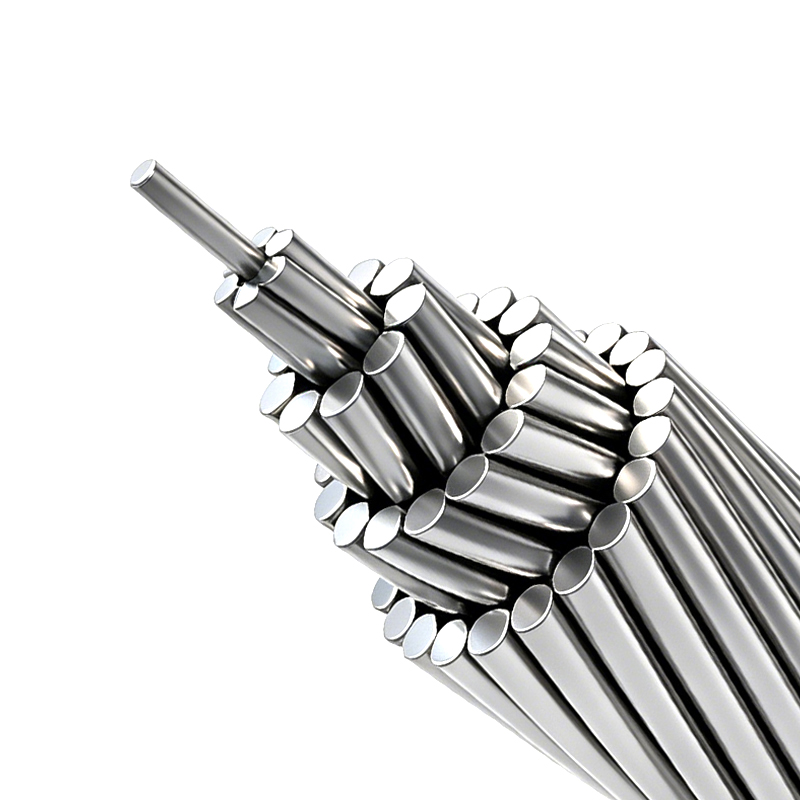
AAC, AAAC & ACSR - Aluminum and Aluminum Alloy Stranded Conductors
-
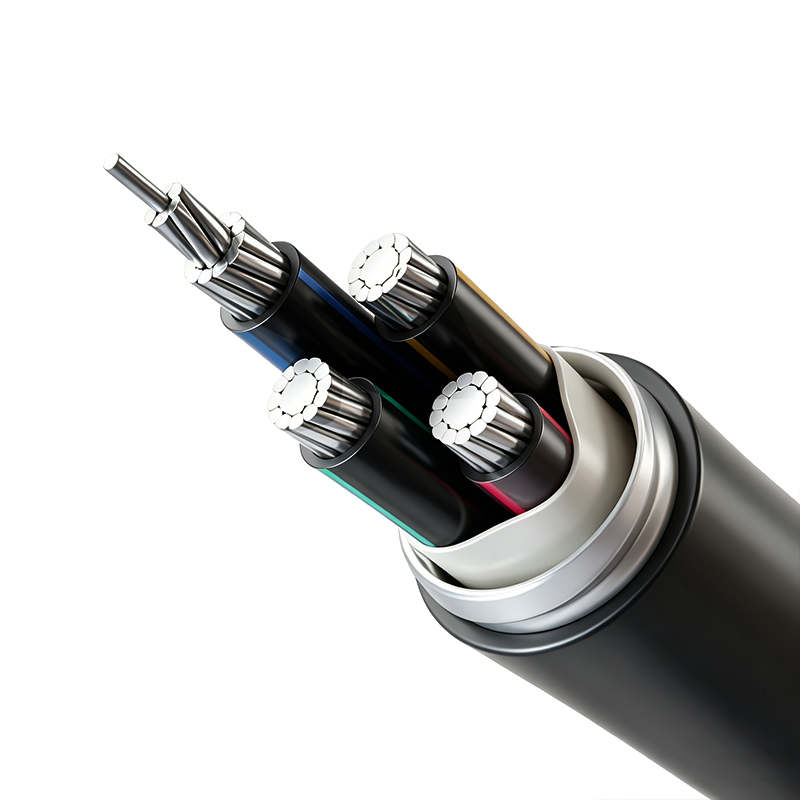
Aluminum Alloy Conductor Plastic Insulated Power Cable (Rated Voltage up to 26/35kV)
-
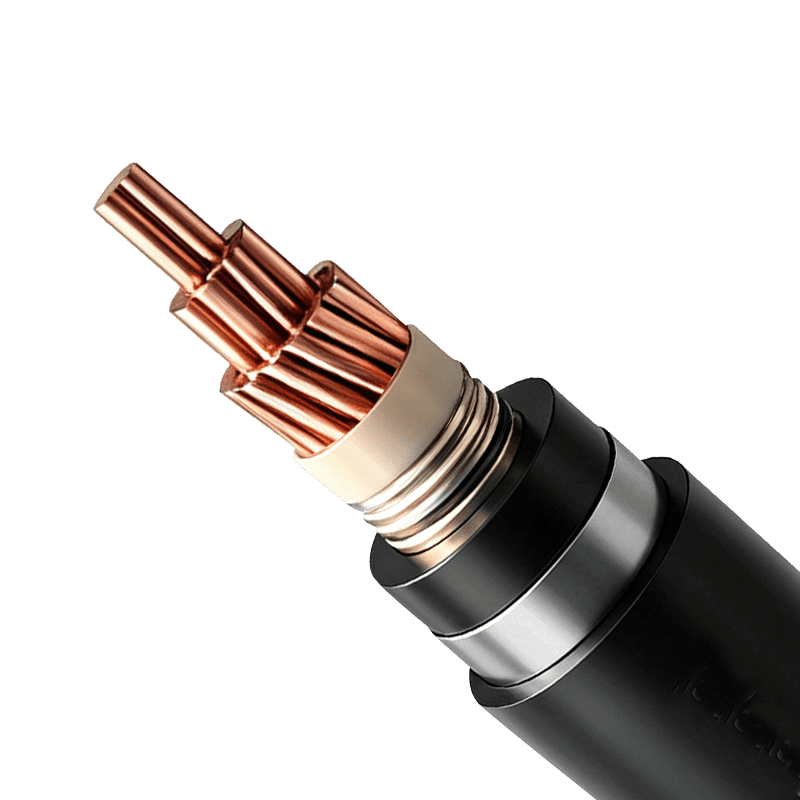
Power Cable for Subway and Urban Rail Transit (Rated Voltage 35kV)
-
Aerial Insulated Cable (Rated Voltage 1kV, 10kV, 20kV, 35kV)
-
Cross-linked Polyolefin (XLPO) Insulated Wire and Cable (Rated Voltage 450/750V and below)

Copyright © Wuxi Guanghuan Cable Co., Ltd. All Rights Reserved. Power Cables Manufacturer Electrical Wire And Cable Factory

