


 English
 中文简体
 русский
 Español
 عربى

2 Pair Twisted Shielded Cable: Construction, Selection, and Installation
Content
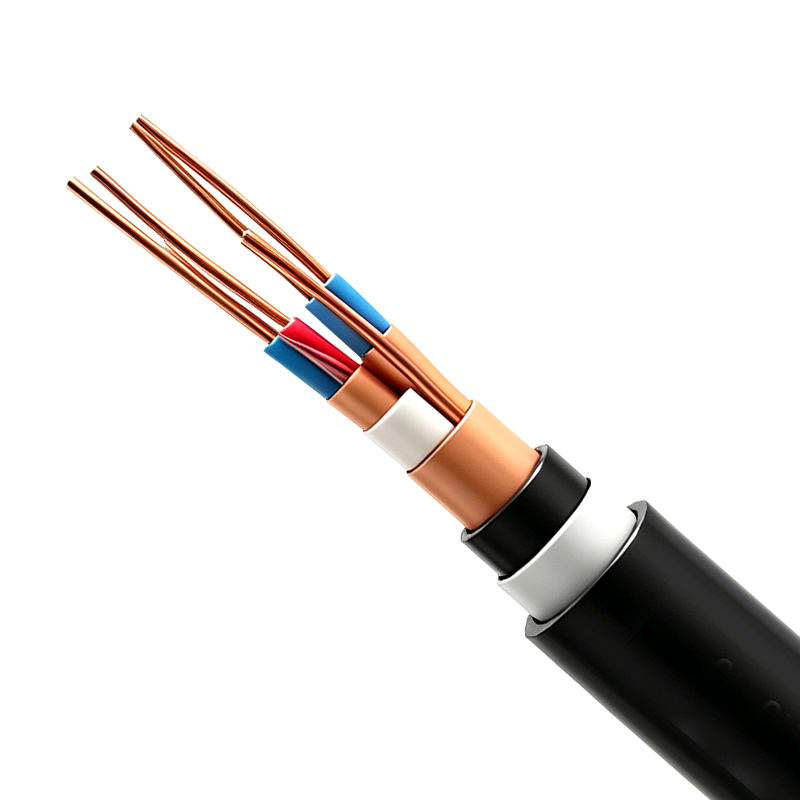
A 2 pair twisted shielded cable looks simple from the outside: one jacket, four conductors, and a shield. Inside, however, the pairing and shielding do real electrical work. The cable contains two twisted pairs, usually with an overall metallic shield and a drain wire. It is built for circuits where noise, crosstalk, or signal distortion can turn a clean measurement into a moving target.
In our work at Wuxi Guanghuan Cable, we see this cable most often in industrial instrumentation, control panels, and low-voltage signal circuits. It may carry analog readings, serial data, or control signals over short to medium distances. The details matter: a cable that works well on a slow 4-20 mA loop may not be the best choice for a fast digital bus, and a foil shield that protects a fixed installation may not survive continuous flexing.
What “2 Pair Twisted Shielded Cable” Means
Two pairs means four conductors, arranged as pair A and pair B. Each pair is twisted at a defined lay length. The twist is not decorative. It keeps the two conductors close together and exposes them to nearly the same electromagnetic field, so induced voltages tend to cancel. The remaining error is much smaller than it would be in two parallel wires.
The shield is the second line of defense. It can be an aluminum foil, a braided copper screen, or a combination of foil and braid. A drain wire, usually tinned copper, runs in contact with the foil so the shield can be terminated. The outer jacket may be PVC, PE, LSZH, or another compound chosen for temperature, flame, oil, or UV exposure. Some designs shield each pair separately and then add an overall shield; others use one overall shield around both pairs. Both can be called “twisted shielded cable,” but they are not interchangeable in every installation.
For instrumentation and control panels, our computer and instrument shielded cable is one product family built around this principle.
 Computer and Instrument Shielded Cable for Low-Voltage Signal TransmissionLow-voltage shielded cable for computers, instruments, and automation, with individual, overall, or combined shielding to reduce crosstalk in control and signal circuits.View Product →
Where 2 Pair Twisted Shielded Cable Is Used
This cable is a practical choice when two signal paths need to share one jacket without turning into an antenna. Typical applications include:
- Analog instrumentation, such as transmitters, sensors, and 4-20 mA or 0-10 V signal loops.
- Two-wire serial links, including RS-485 and similar low-voltage data circuits, where one pair carries the signal and the other may serve as a second channel or spare.
- Control and interlock wiring inside panels, where a small number of signal pairs need mechanical protection and noise rejection.
- Building automation, access control, and monitoring systems that combine low-voltage signals in one route.
It is not a universal replacement for power cable or for a dedicated high-speed data cable. If the circuit carries significant current, high voltage, or a protocol with strict impedance requirements, check the cable’s ratings and the project specification before selecting it.
Why Twisting and Shielding Work Together
Twisting addresses magnetic coupling. When a changing magnetic field reaches a twisted pair, the voltage induced in one half-turn is opposite to the voltage induced in the next. The small differences that remain appear as common-mode noise, which a differential receiver can reject. Shielding addresses electric fields and, with a good braid, some radio-frequency interference. The shield does not “absorb” all noise; it provides a low-impedance path that diverts interference to ground.
That is why a shield without a proper ground connection is little more than a decorative wrapper. The drain wire must be bonded to the reference point specified for the system. The cable’s shield is not a safety earth conductor, and it should not be used as a signal return or as a power conductor.
Overall Shield or Individually Shielded Pairs?
An overall shield is usually enough when both pairs carry similar low-frequency signals and external interference is the main concern. Individually shielded pairs add separation between the two circuits, which helps when one pair is sensitive analog and the other is digital, or when pair-to-pair crosstalk is a risk. The trade-off is a larger diameter, higher cost, and more termination work. For many control and instrumentation panels, the overall shielded design is a sensible starting point; for mixed-signal or long runs, individually shielded pairs may be worth the extra effort.
Key Specifications to Check Before Ordering
“2 pair twisted shielded cable” describes a construction, not a complete performance specification. Two cables with the same pair count can behave very differently. The table below lists the points we usually review with a customer before quotation.
| Parameter | What to check | Why it matters |
|---|---|---|
| Conductor size and stranding | AWG or mm²; solid or stranded | Affects current capacity, voltage drop, flexibility, and termination. |
| Characteristic impedance | 100 Ω, 120 Ω, 150 Ω, or another value | Critical for digital buses; a mismatch causes reflections and distorted edges. |
| Mutual capacitance | Pair-to-pair and conductor-to-shield values | Shapes rise time and signal quality, especially on longer runs. |
| Shield type and coverage | Foil, braid, or foil/braid; coverage percentage | Determines interference protection, flex life, and termination method. |
| Drain wire | Size, material, and continuity | Makes shield bonding practical and reliable. |
| Voltage and temperature rating | Maximum voltage; fixed or flexing temperature range | Must match the circuit and the environment. |
| Jacket and approvals | PVC, LSZH, PE, PUR; flame, oil, UV, and project standards | Affects safety, durability, and compliance. |
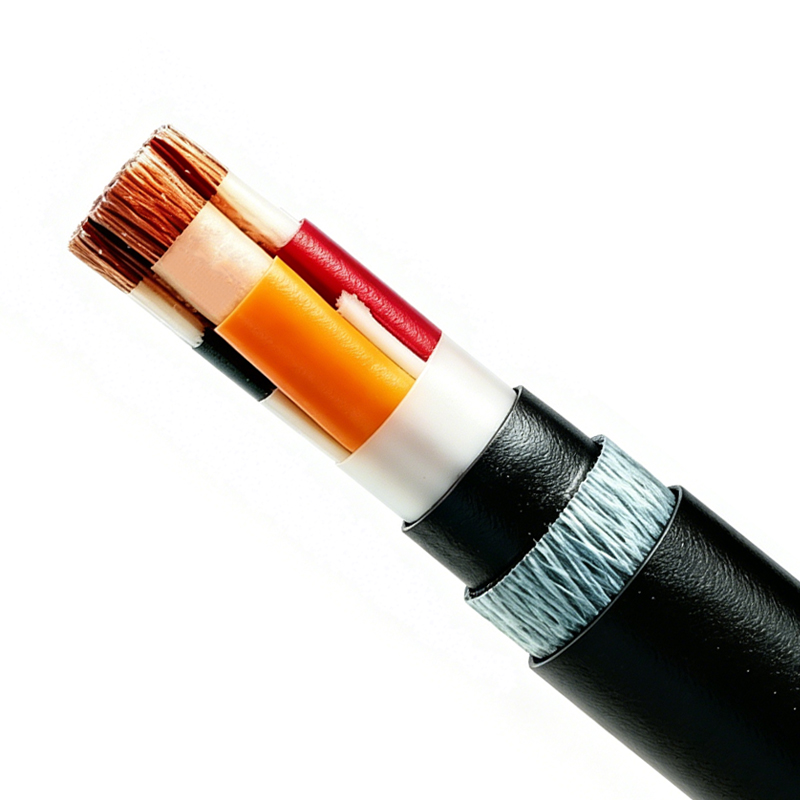
For control circuits that do not need pair shielding, our plastic insulated control cable is a separate option.
 Plastic Insulated Control Cable for Monitoring and Control SystemsPVC or XLPE insulated control cable rated 450/750 V for monitoring, control, and protection circuits, with optional shielding and armor for installation needs.View Product →
Shield Grounding and Installation Practice
Grounding is the step where good cable can still produce poor results. For low-frequency analog signals, the shield is often bonded at one end, usually at the control panel, to avoid a ground loop between two buildings or two pieces of equipment. For high-frequency digital signals or strong electromagnetic fields, bonding at both ends may be required, but the installation must have an equal-potential bonding path. The project specification and the equipment manufacturer’s instructions should decide the method; there is no single rule that fits every site.
Use a short, low-inductance connection for the drain wire. A long “pigtail” creates a high-impedance path at high frequencies and can make the shield ineffective. Where possible, use a connector or clamp that bonds the shield around its circumference. Keep the cable away from motor cables, transformers, and switched power lines. If a signal cable must cross a power cable, cross at right angles rather than running parallel. Maintain pair identity at terminals: do not split a pair across distant terminals, and do not use one conductor from each pair as a new pair. The twist is part of the electrical design.
Common Mistakes We See in the Field
- Choosing by pair count alone and ignoring impedance, capacitance, and shield coverage.
- Using foil-shielded cable in a continuous-flex application where a braided shield would last longer.
- Grounding both ends without an equal-potential bond, then blaming the cable for hum or drift.
- Using the drain wire as a signal return or as a power conductor.
- Running signal pairs parallel to motor or inverter cables for long distances.
- Leaving unused pairs or shields floating in a way that allows them to pick up noise.
- Ignoring the jacket’s temperature, oil, UV, and flame requirements.
From Our Cable Factory to Your Project
Wuxi Guanghuan Cable has been manufacturing cables in Yixing Guanlin, the cable town of China, since 1998. Our electrical equipment cable range includes shielded computer and instrument cable, plastic insulated control cable, and other low-voltage cables used in control and signal circuits. We are comfortable discussing the practical details: conductor size, shield style, pair construction, jacket material, and the standards your project requires.
We do not pretend that one cable solves every noise problem. The better starting point is a short description of the signal, the distance, the nearby power equipment, and the grounding plan. From there, the choice between overall shielding and individually shielded pairs, foil and braid, or one jacket material and another becomes much clearer. You can review our product certifications for the compliance side of the discussion.
If you are specifying a 2 pair twisted shielded cable, write down the signal type, distance, impedance, environment, and grounding method before comparing prices. Those five details will tell you more than a generic “shielded” label. And if you want a second pair of eyes on the selection, our team is glad to review the application with you and help you choose a cable that behaves predictably after installation.

Copyright © Wuxi Guanghuan Cable Co., Ltd. All Rights Reserved. Power Cables Manufacturer Electrical Wire And Cable Factory

